I am telling my story of how I developed and recovered from long covid. In case you missed it, check out Part 1: How I got sick.
Believing that recovery was possible
After medical professionals were unable to help, I turned to YouTube.I stumbled across Raelan Agle’s YouTube channel. This is the first time I heard that anyone recovered from ME/CFS or long covid.
Raelan had ME/CFS for ten years. She found a way to recover before it was thought that people could. She then started a YouTube channel interviewing others who had recovered. She thought there may only be a few people, but it turns out there were so many more. An academic researcher has even published a paper on findings from the stories on Raelan’s channel!
At this point I did NOT accept that I personally could get better. But I did accept other people got better. This was enough hope for me to keep moving forward.
Gentle movement
The best thing that came from the long covid clinic a fellow sick person sharing information about Suzy Bolt’s long covid recovery program. Suzy, a yoga teacher who also got sick with long covid, used gentle movement, meditation and breath work to help herself heal. And now she is teaching others.
The subscription was £9 for a week, so I gave it a try. There were a few classes I could take every day, live on Zoom. The teachers spent 15 minutes going around the class greeting each person by name and saying welcome. This was incredibly meaningful to me as I was so isolated.
Suzy and her teachers focused on social connection, silly costumes, laughs, empathy, celebrating small wins and most importantly hope for recovery for everyone.
The movements were so small in the level 0 and level 1 classes, I could actually participate. It would be things like laying down and rocking side to side a little bit, and then resting. Or breathing a little more deeply and slowly, and then resting.
Leaning into body wisdom
Suzy also gently encouraged us to reconsider medical advice when it was making us very anxious. For example, she encouraged us to consider trying not wearing a smart watch that beeped at you when your heart beat went over a certain number.
She wanted us to connect with our bodies. Rest when it felt like we needed to and do a little more when it felt safe. Eat nourishing food without too much stress. Prioritize connection with people.
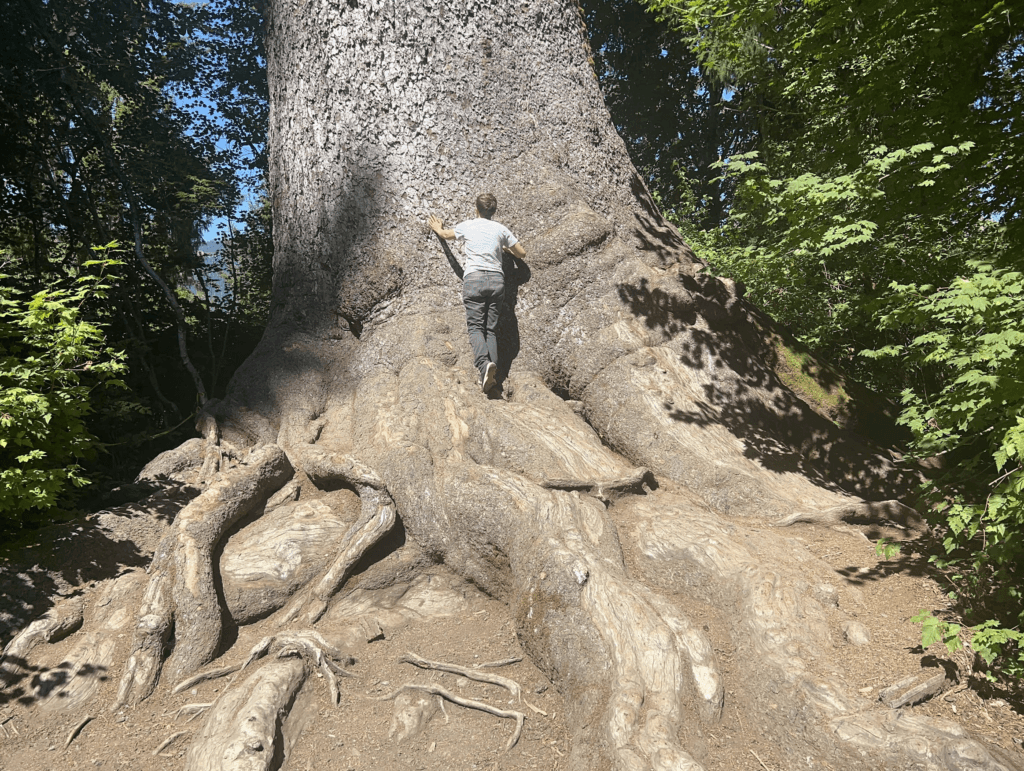
The first time I took my smart watch off, I walked about 30 minutes to see this giant tree. I was so excited! I needed to spend most of the rest of the day in bed, but I felt like it was worth it.
I also started to notice when I called something “exercise” I felt incredibly anxious and struggled to do it. But when I just needed to get something done that I wasn’t so worried about, I could do more with fewer symptoms.
I didn’t know what to do about this observation yet, but I this did not make logical sense for a physical illness.
Finding recovery-focused community
Some of Suzy’s live classes had time for discussion after. This is where I met my recovery buddy and now good friend, Devon.
Devon and I had worked for the same large employer when we got COVID, but had never met. Considering Suzy’s program is based in the UK and we live in British Columbia, Canada, this seemed like a wild coincidence!
Although we had not yet met in person, Devon and I started texting and calling each almost every day. We both had severe ME/CFS. If I knew if needed to cry to someone who got it, she would be there for me. And I for her.
Most importantly, we shared everything we were reading and learning, trying to figure out what worked and what did not. We had seen the same specialists and received the same diagnoses and negative outcomes. But we remained focused on recovery and holding onto hope that it was possible for us.
At one point, I made a chart of all the recovery approaches/programs that seemed to actually help people heal. I compared them to each other noting what they all agreed and disagreed on. Going over this with Devon, the only person I knew really in the weeds with me, helped me move forward with the approach that eventually helped us both heal.
(BTW, Devon is now a certified Pain Reprocessing Therapy Coach specializing in long covid, offering her own program and working with Raelan Agle on hers!)
Travel
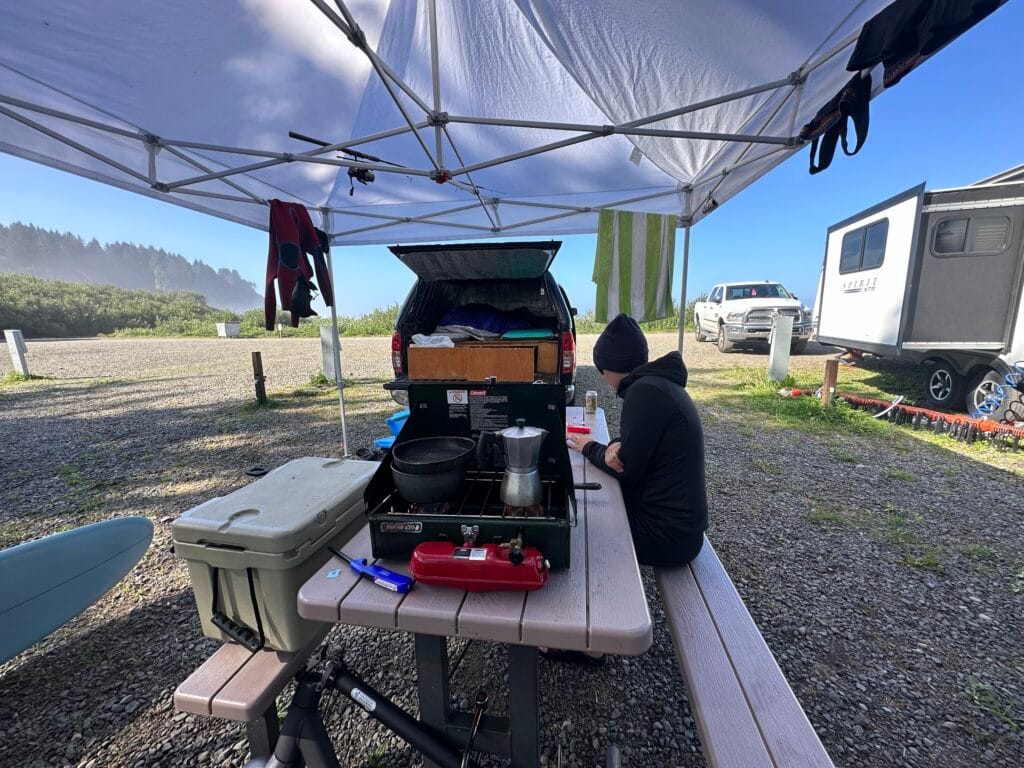
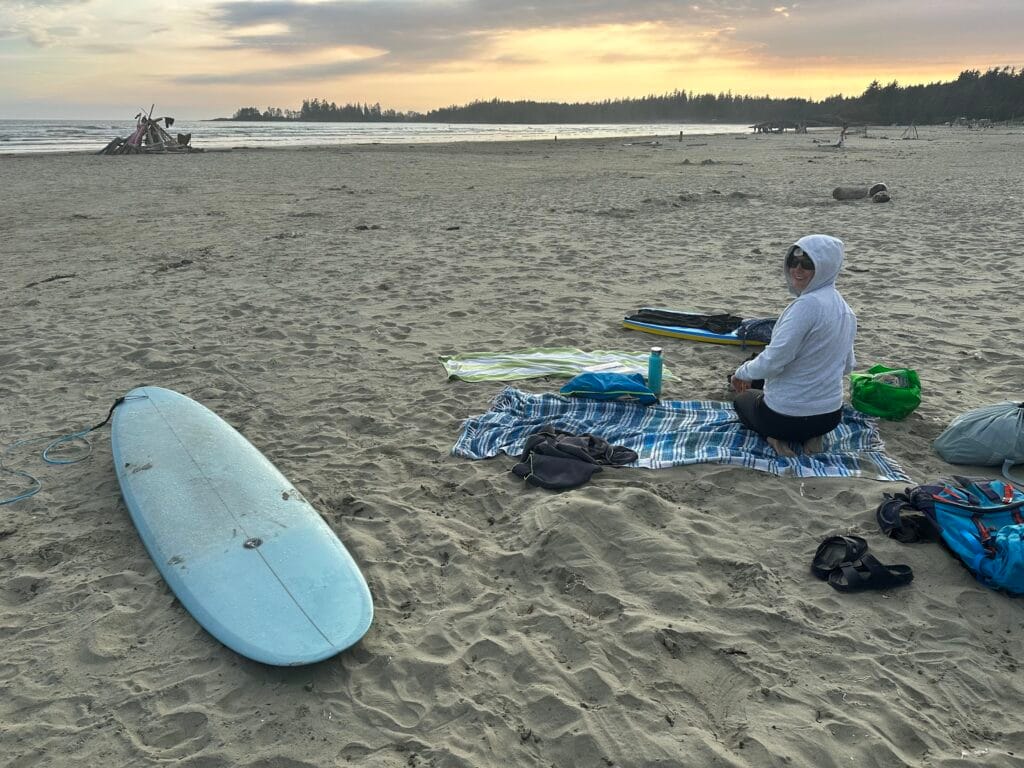
My incredibly supportive partner very generously took us on a two week beach road trip. She went surfing, I laid on the beach and watched the waves or napped..
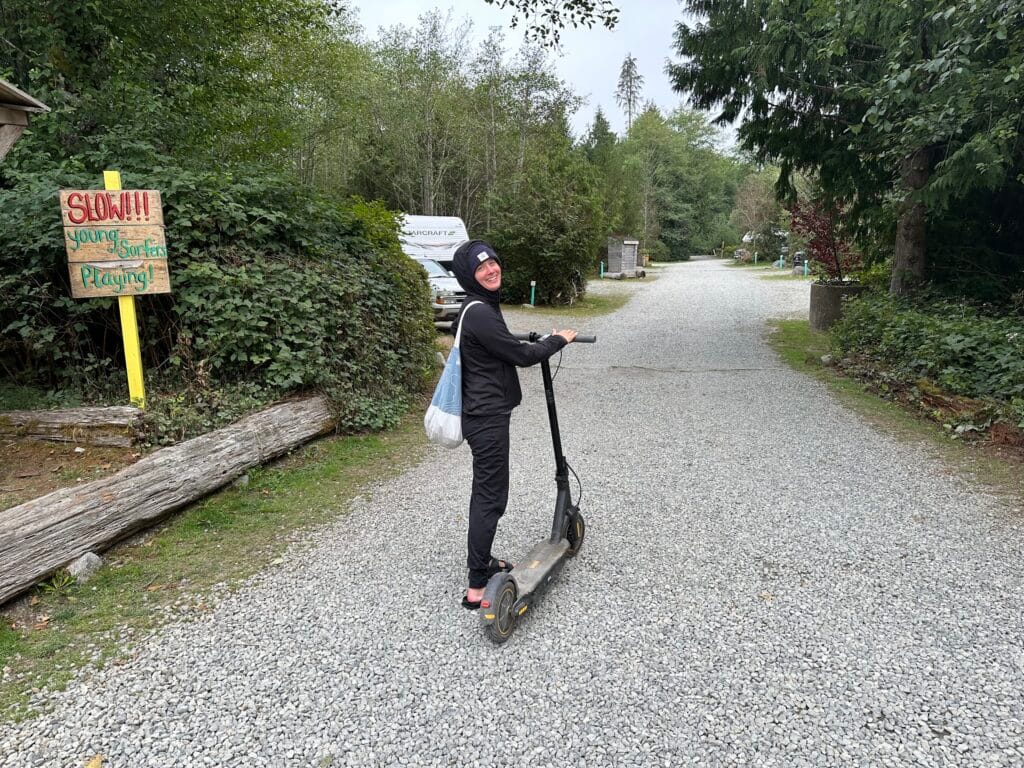
I couldn’t walk very far still, so we booked a campsite directly next to bathrooms. I also brought my electric stand up scooter and zoomed around everywhere instead of walking most of the time. I still spent most of the day napping or laying down. Lee did all the packing, all the setup and take down, all the driving, all the food prep and all the unpacking.
Even with these accommodations, I ended up doing way more than I did at home and felt better than I had in a while. I was away from my regular environment, and seemed to be sort of forgetting to be sick. I also had no benchmark for how much activity was “too much” so I just did what felt good.
I took more walks, splashed around in the ocean a bit, and ate out in a few restaurants for the first time in a long time. I also gave up on doctor-recommended diets, where I was supposed to avoid gluten, dairy and sugar. I ate so many donuts and ice cream and if it can any impact at all, it made me feel a little better.
When I got back home, my expanded capabilities and lower symptoms did not last. I did not understand why yet, but I knew it did not make sense for a purely physical illness.
I was beginning to get suspicious of the idea of long covid as physical damage to my body…
Introduction to Brain Retraining
Through social media, I came across the idea of brain retraining for chronic fatigue and long covid.
Recovery coach Miguel Bautista explained it in a way that made sense to me. (Miguel also lives in Vancouver like me and had similar unhelpful experiences with our health care system.)
Brain retraining, in short, is the idea that your nervous system is stuck in extreme freeze or fight/flight due to exceptionally high stress. And with practice, you can change how you respond to symptoms. This way you train your nervous system back into a normal state of functioning and fully recover.
I decided to sign up for the Gupta Program, one of the longest running brain retraining programs. This program took several hours a day in reading, videos, daily meditations and daily mental exercises.
The Gupta Program met me where I was at (thinking I had a physical illness) and gently opened my mind to considering the role my thoughts and past trauma played in making me sick. It also kept me focused on the possibility of recovery.
In six months, I recovered from the majority my symptoms, other than brain fog and fatigue. Since people always ask, this included my POTS-like symptoms. I wrote a full review of the Gupta Program on my blog, if you are interested in learning more.
After this initial commitment, I felt like I had done all I could with the program. Definitely improved, but still unable to work, exercise of function like a normal person. My anxiety was also at some of the lowest levels it’s ever been, despite my continued disability.
The role of trauma, emotions and the body in healing
Through social media, I was also introduced to the idea of “top down” vs “bottom up” healing.
Brain retraining is top down, meaning you work with your thoughts and tried to change them.
Bottom up healing is being present with your physical sensations and tuning in to your nervous system, including experiencing you emotions as bodily sensations.
As a former straight A student, my mind was an old friend. So brain retraining came naturally to me.
But I could not for the life of me imagine what “feeling” an emotion in my body was like. Or really, just sitting with the sensations in my body in a neutral or positive way.
I had an sense that my next steps involved bottom up approaches. So I prepared to transition my focus away from brain retraining and researching somatic approaches.
This work focusing on being present with my body sensations and emotions was life changing. Not only did I fully recover from long covid, but I healed from trauma that had been causing pain, fatigue and other symptoms for most of my life.
I would not wish chronic fatigue or illness or anyone. But it did give me this gift of space for profound healing that I will forever be grateful for. More on this in part 3.
Leave a Reply