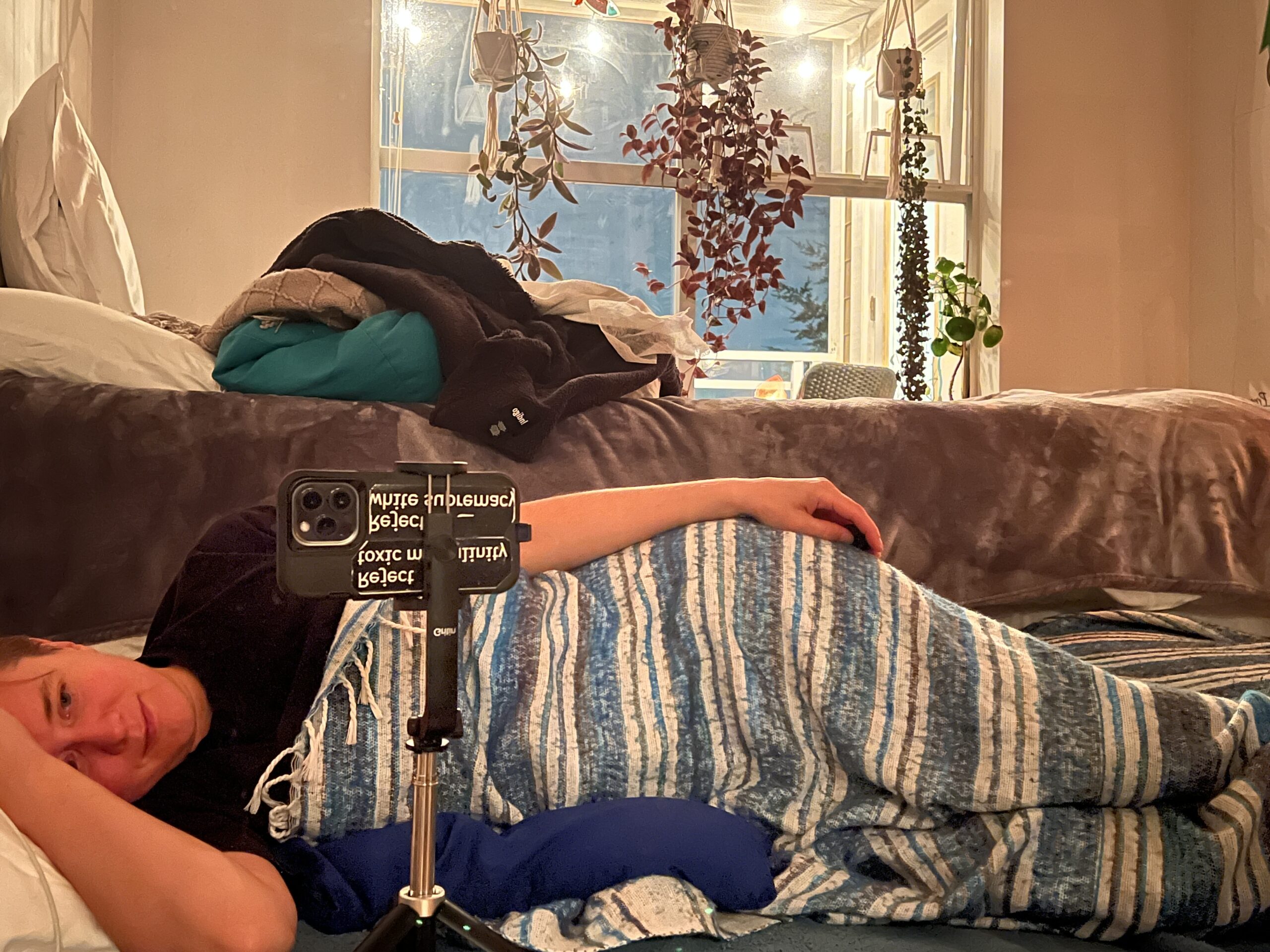
Now that I have been fully recovered for a while, I wanted to share my long covid recovery story. This first part is how I got sick, what symptoms I had, and a few clues into what in my life I caused this disabling reaction to a virus.
Content warning: I talk about lockdown, my symptoms in detail and suicidal ideation. If this is tricky subject matter for you, please take care. And know that this story has a happy ending!
Before I got sick, things were really intense
At the start of 2020, I worked in communications at a large public university. When lockdown happened, my job shifted to be all about the pandemic response. Our community had a lot of questions, and they turned to the university for answers.
We didn’t know what to do. No one did. We watched every press conference, read all the rules, and consumed all the health updates. And we tried to piece together advice as accurately and compassionately as we could.
We were also asked to use the university’s influence to create content that would promote social cohesion, treat others with kindness, and follow the ever-changing and increasingly unpopular health guidelines.
I worked late and on most weekends for months on end.
All this to say, I was absolutely immersed in the details of the pandemic in a way most people were not.
Personality traits
At the time, I responded to stress with perfectionism and obsessive work. I was a very anxious person with little self-awareness of how I felt emotionally or how to take care of myself. I thought training for an ultra marathon during one of the most stressful times in my life was the epitome of self-care.
I am a conscientious person who is willing to make personal sacrifices for the good of the whole. I also am a literal thinker, who has a really hard time understanding the space between what someone says and what they intended. So I took all COVID precautions at face value, while most people were more flexible.


I also saw myself as a “sick person” who always seemed to get colds and sports injuries way more than anyone else. I was worried COVID would be worse for me than for other people.
An acquaintance developed long COVID in the early days and lost her ability to walk and communicate, which I found deeply frightening. I heard a voice in my head say, “If you get COVID, you will get long COVID too.”
All these these made an already intense situation even harder for me.
Venturing out of the bubble
Due to careful social distancing, masking, and the privilege of working from home, I avoided COVID for three years.
As the world started to return to normal, so did my worry about the virus. I had all the recommended vaccines. Almost everyone I knew had gotten COVID and was fine. I started eating in restaurants and going to events again.
My partner and I had moved to a new city during the pandemic, and I had switched jobs. I loved everything about our new lives, especially how close we were to the mountains.
I had just gotten a promotion at work that came with a lot more responsibility. My partner and I had purchased our first home together. I was going to live far away from public transit for the first time, so I purchased my first new car. Everything was a little scary, but exciting. I felt like I was finally coming into the life I had dreamed of and worked towards for so long.
Getting COVID the first time
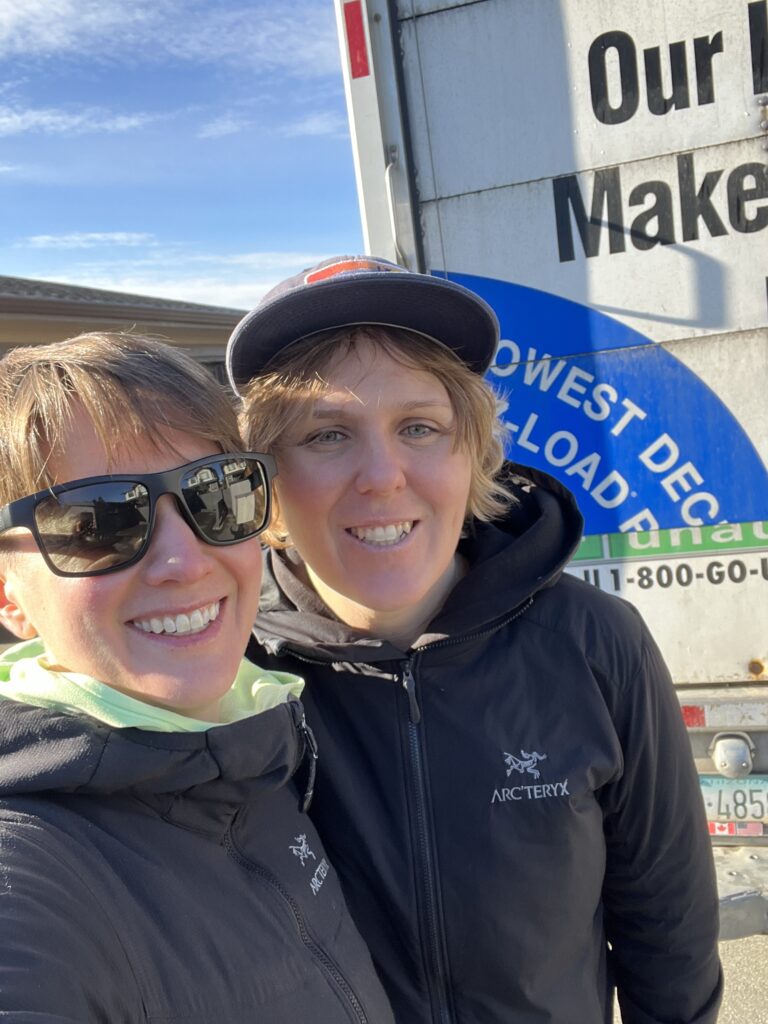
The weekend we moved into our new home, I felt really tired. This was understandable as moving is pretty stressful.
When I went back to work on Monday, the tiredness felt even worse. I still didn’t think much of it.
Then one of the friends who helped us move told me she tested positive for COVID. I also took a test, and it came back positive. A wave of adrenaline washed over me. Now that I thought about it, my throat was a little sore, and my nose was a little runny.
I was so tired.
Lee was away travelling for work. I was sick, alone, in a new condo with all our stuff in boxes. I didn’t even know where my forks were. My fridge was empty. The mattress was on the floor in a corner.
I tried to stay calm. I ordered some food delivery and rested. I became so tired I couldn’t even walk around my apartment.
Symptoms sticking around
My runny nose and sore throat were gone in a day or two. But a number of other very strange symptoms started popping up.
- I was incredibly mentally and physically tired.
- I had intense brain fog and had a hard time thinking clearly.
- I could barely talk or walk because I was so out of breath.
- My vision was completely distorted. Everything was way too bright and blurry. At times, I could not focus my eyes to read. I lost my peripheral vision.
- I could not ride in cars as a passenger or take the bus because I would get so motion sick.
- My resting heart rate was very high, like I was running. I would be on the verge of blacking out when going from sitting to standing. (POTS-like symptoms.)
- I slept 30 minutes a night for weeks. I eventually was able to sleep a few hours at a time, but not much more.
- I would get hot flashes and night sweats, even though I was still in my 30s.
- I could not stand any background noise or listen to music.
- I had to sunglasses all the time, even indoors, because the light was unbearable.
- I started getting migraines. At first they came occasionally and were tolerable. Eventually they started being every single day, with 8/10 pain.
I was very distressed at how sick I was and for how long. People shared with me that they also had weird symptoms. And that they stuck along a long time.
But as the weeks went on, things kept getting worse.
I started wishing I were dead. But also, not really. I really loved my life. I just could not stand feeling this tired, helpless and terrified.
Trying to act normal
I made an appointment with my nurse practitioner. She thought I was depressed and anxious, prescribed medication and encouraged me to keep working and exercising.
The medication did make the suicidal ideation end, which was a relief. But everything else stuck around or got worse.
I kept working, or at least trying to. My promotion was temporary, and I needed to apply after one year to keep it. I wanted to prove myself.
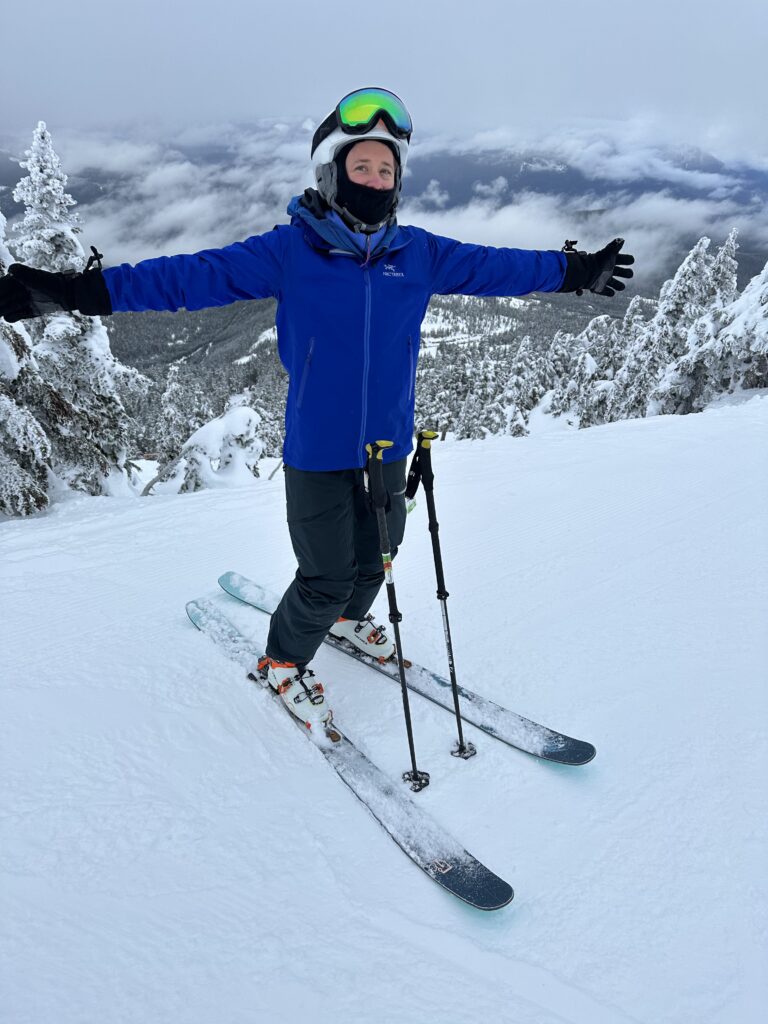
I also tried to keep up my active lifestyle of hiking, running, climbing and skiing. The thing is that I could do it a little bit. I almost felt normal at times. Then I would crash and be unable to function for days on end.
Referrals to specialists and the downward spiral
I was referred to the provincial long COVID clinic. This is when things started getting quite a lot worse.
The clinic said they could teach us to manage our lives with these symptoms. They did not think most of us could get better, but did try to leave a little space for hope.
I took that hope and ran with it. I followed everything they said. Again, see above. about being a literal thinking.
Activity had to be carefully planned so we did not go over our energy allowance. We needed to keep our symptoms stable at all costs.
We had to keep our heart rate down at all times. I set up my running watch so that it would beep at me whenever my heart rate went over my maximum number. It beeped at me any time I moved. Danger danger danger.
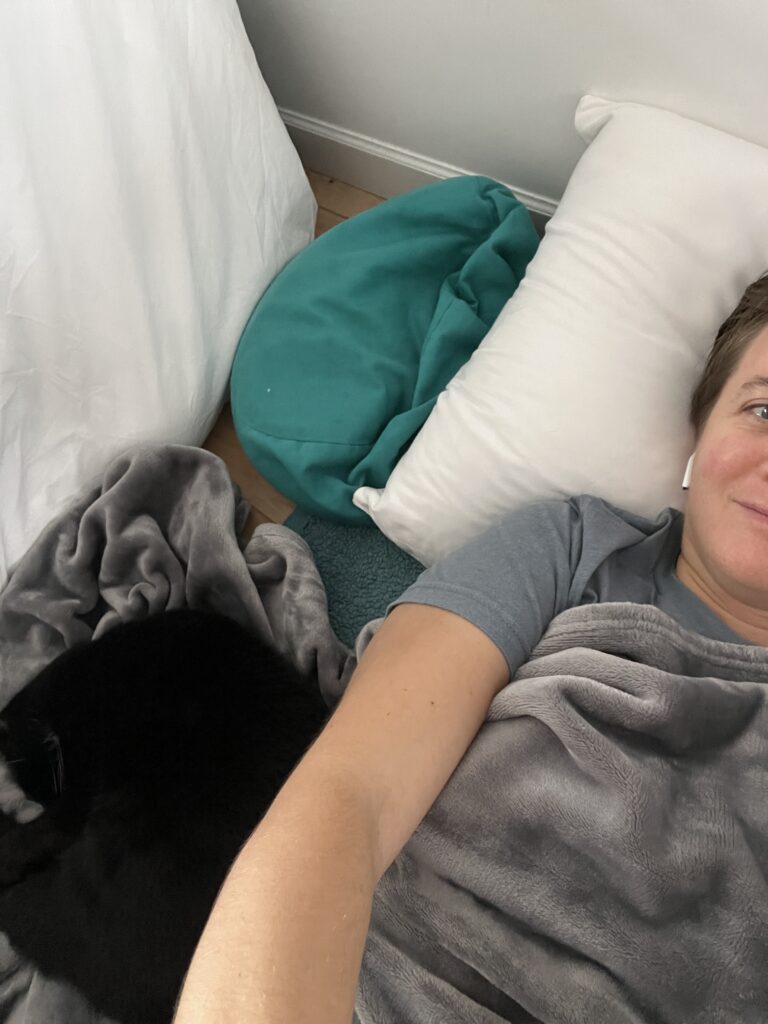
I stopped working in the hopes I would be better in a few months. I laid in bed, only getting up to use the bathroom, trying not to use any unnecessary energy.
Desperately searching for answers
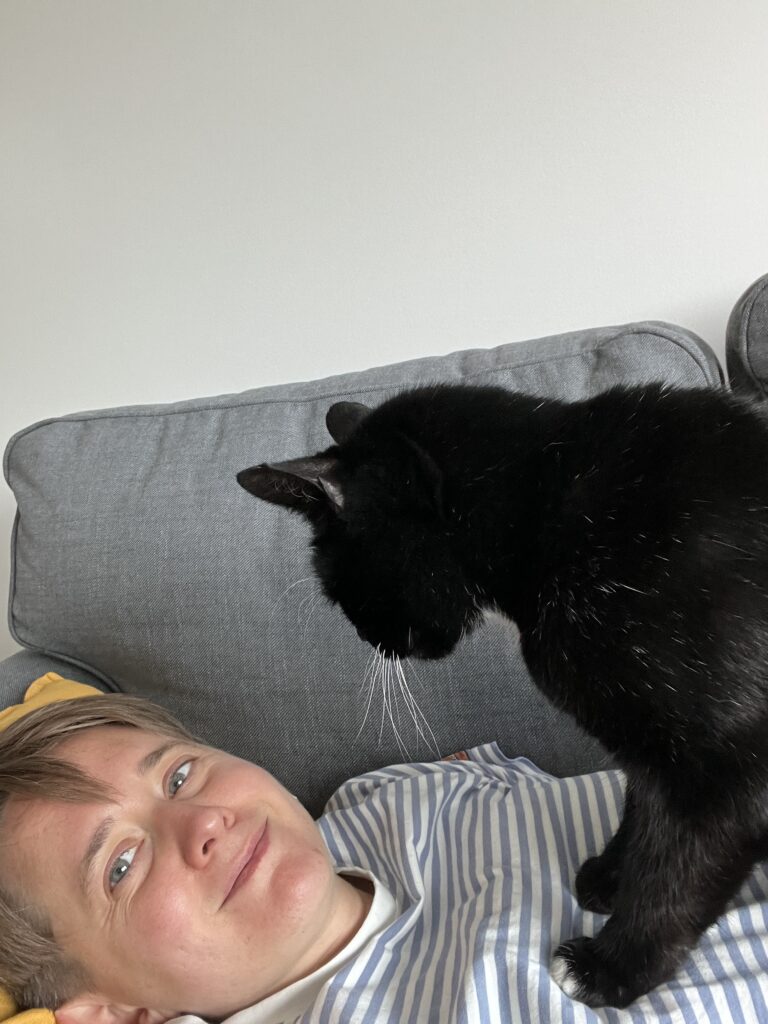
I stopped being able to walk anywhere, other than shuffling around my apartment. I couldn’t stand long enough to cook or clean up anything. I could even’t shower some days.
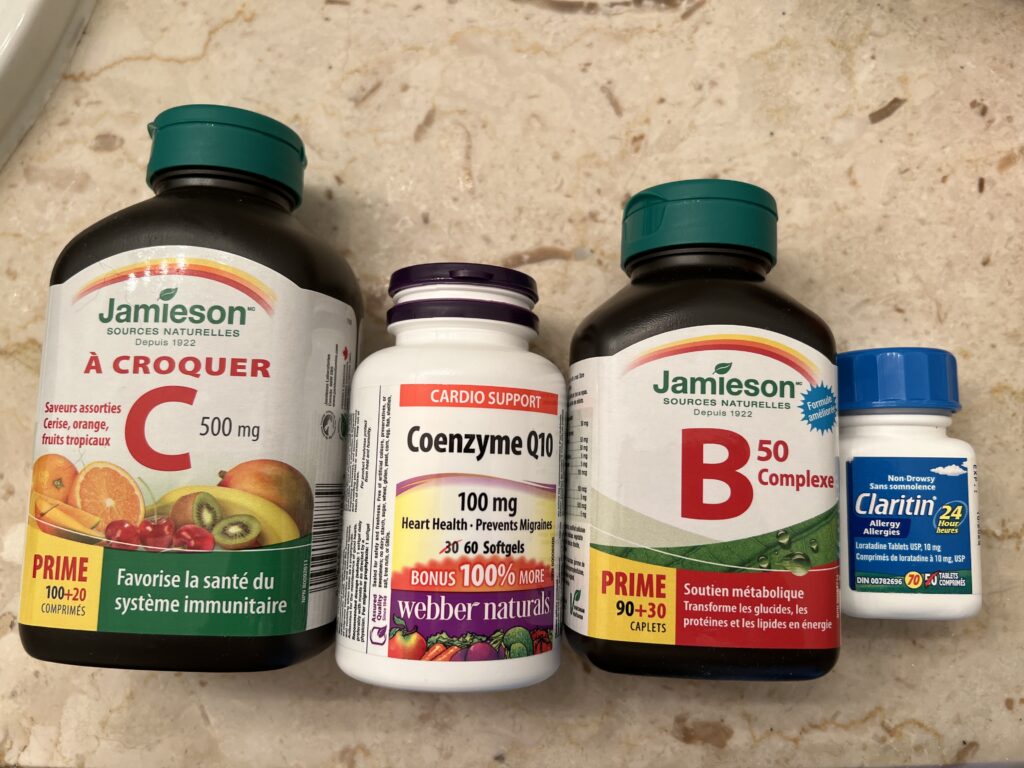
I spent hours in bed googling my symptoms and looking for other things to help me. I bought thousands of dollars’ worth of supplements. I tried extreme and restrictive diets. Nothing helped.
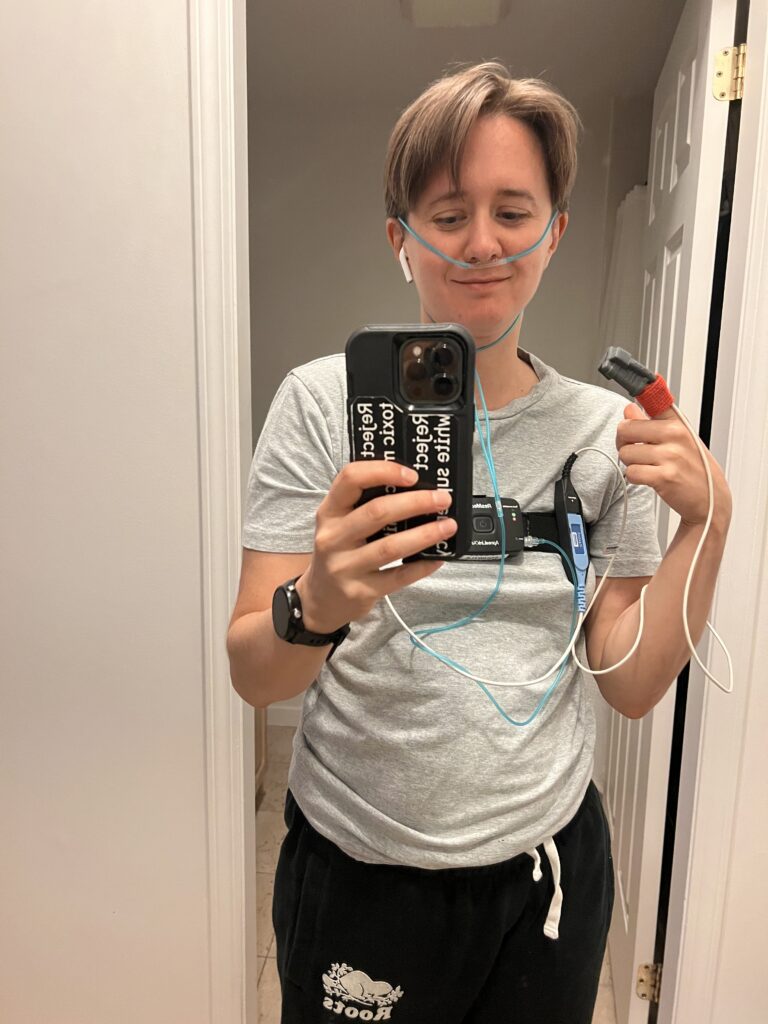
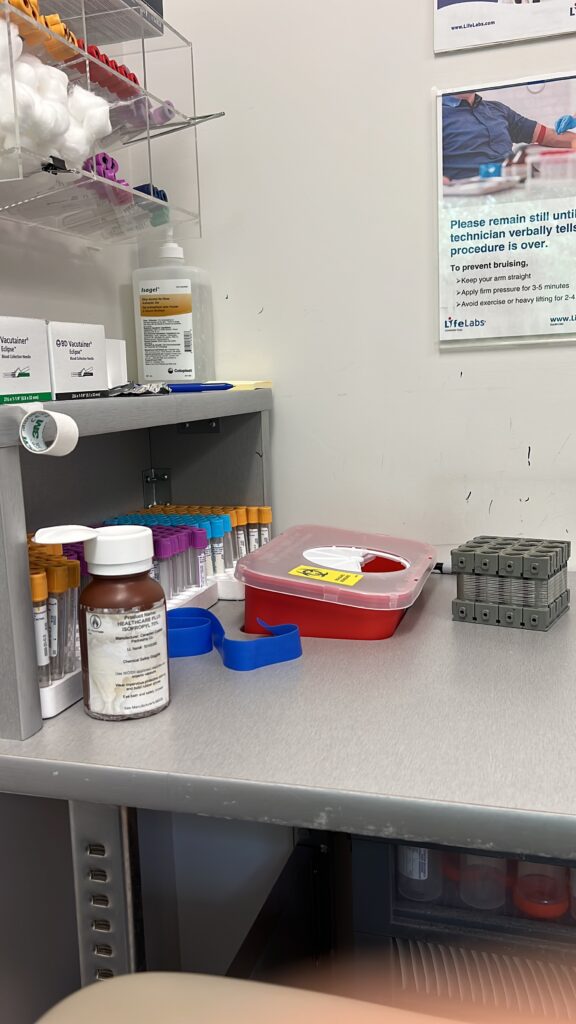
I worked with my nurse practitioner to do extensive medical testing to see what was wrong with me. I did a sleep apnea test, heart tests, blood tests, cancer tests. Nothing was wrong at all.
Being diagnosed with chronic fatigue syndrome
About nine months post-initial infection, I was also seen by the province’s chronic fatigue clinic. I was diagnosed with chronic fatigue syndrome.
My specialist told me that only 5% of people got better. (Note from the future, this is not true!!!) She said I should plan on this being the rest of my life. And I had to be very careful not to get any worse, as I would lose that functionality forever.
After the diagnosis, I became the sickest I ever was. I could only lie in bed with my eyes shut, doing nothing. I couldn’t watch TV. I tried to listen to audiobooks, but I couldn’t understand the story. I even tried children’s books and books I had already read. I stopped being able to follow conversations. I couldn’t really talk.
This is also when my long-term disability insurance was denied. Years later, I read the note from the doctor who made this decision. We had never spoken. He had never assessed me. He said I did not have chronic fatigue syndrome or long covid. I may be slightly uncomfortable, but I was not disabled. I had to return to full-time work immediately.
If only it were that easy.
Leave a Reply